Middle and Upper Kuskokwim Watershed Coalition Updates
The Middle-Upper Kuskokwim Watershed Coalition (MUKWC) brings together rural communities of the middle Kuskokwim and regional partners to protect the health and sustainability of the Kuskokwim River watershed. Formed in 2023 and currently hosted by Georgetown, the coalition works to strengthen collaboration, stewardship, and a unified voice for the region, where the river is central to subsistence, culture, and daily life.
The coalition is currently hosted by Georgetown, where the Native Village of Georgetown (NVG) secured a grant to help restart and support this work. That funding, which runs through September 30, has been critical for coordination, outreach, and building a strong foundation. As part of a planned transition, the coalition is moving under the Native Village of Napaimute as its new host tribe. To support this shift, Kattie Wilmarth (Georgetown) and Brianna Sherer (Napaimute) have been working together as co-coordinators over the past year, guiding the transition and keeping the work moving forward.
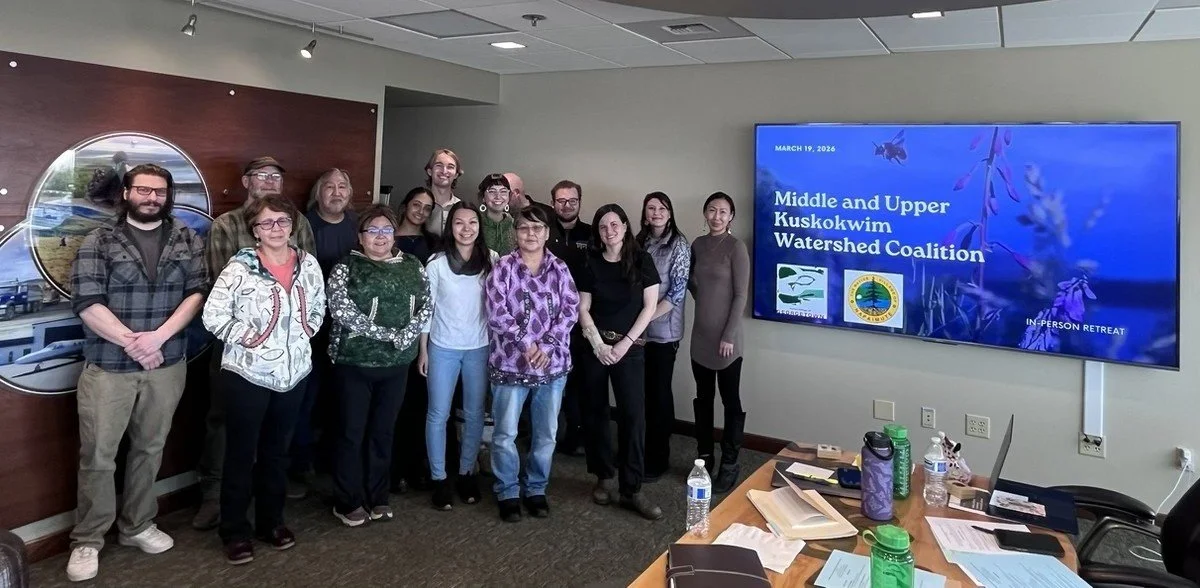
In March, they organized and facilitated a full-day, in-person meeting where MUKWC partners came together to finalize the coalition charter and take a key step toward formalizing the transition to Napaimute. The charter is now under legal review. Once finalized, a letter will be shared with each village inviting their support and signatures, helping strengthen regional alignment and a shared commitment to the future of the Middle-Upper Kuskokwim watershed.
The coalition works closely with Tribes, TKC, the Kuspuk School District, Donlin, the Fish Commission, and others across the region. Together, they’re building local capacity, sharing what they know, and advancing the priorities identified by communities along the river.
A big part of this work has been making information more useful and accessible. Through a research partnership with Georgetown University, the Coalition has compiled a research catalog to track existing studies, so people can easily see what’s already been done and where gaps remain. From there, they started pulling that information into story maps to make the information more approachable and relevant.
One of these story maps became a foundation for outreach. Last fall, they were used to support a mercury awareness campaign, helping share clear, locally grounded information about mercury in subsistence foods and its implications for people who rely on them.
Efforts like Telling The Story of the Kuskokwim focus on sharing knowledge and experiences from the people who live here.